
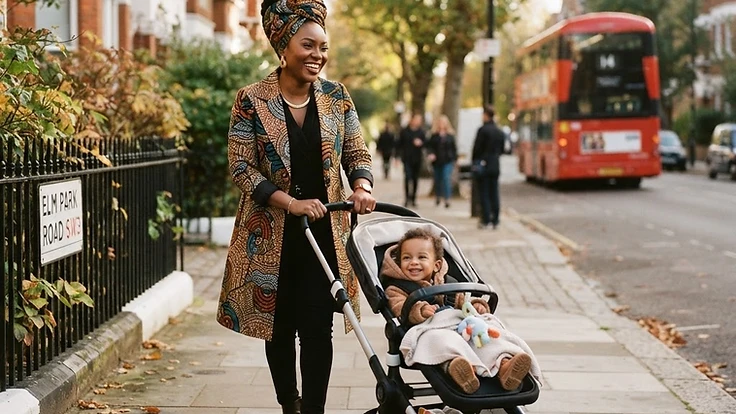
Two worlds, one mother
You left Nigeria (or grew up between both), and now you're raising children under grey London skies instead of Lagos sun. The jollof rice still tastes like home, your mother's voice is still a WhatsApp call away, and your children are growing up British — and Nigerian — at the same time. That is a beautiful, complicated, sometimes lonely thing to be.
Here's what nobody tells you: parenting in the diaspora is a different job description. You're not just raising children; you're translating a culture, defending it, and passing it on — often without the aunties, cousins and village that made it all feel effortless back home.
The quiet loneliness of diaspora motherhood
Many Nigerian moms in London describe the same thing: a full calendar, a full house — and still no one who really understands. Mummy groups at the children's centre are lovely, but nobody there knows what it means when your mother-in-law calls from Aba questioning how you're feeding the baby, or why you insist the baby must greet every adult with "good morning, auntie."
Motherhood abroad can be isolating precisely because so much of it happens inside your head — the cultural negotiations, the guilt, the decisions about which traditions to keep and which to let go.
Keeping the culture alive — practically
Culture doesn't transfer by accident; it transfers by design. The good news is that it's the small, consistent things that stick:
- Speak your language at home. Yoruba, Igbo, Hausa, Pidgin — children absorb what they hear daily. Don't worry about "confusing" them; bilingual children thrive, and the language is the culture's backbone.
- Cook the food, involve the kids. Saturday egusi, Sunday rice — let them pound, stir, taste. Food memory is the strongest culture memory there is.
- Celebrate loud. Gele at birthday parties, Aso Ebi at Christmas, calling elders "Aunty" and "Uncle" — these aren't old-fashioned; they're the thread.
- Take them home. Trips to Nigeria are not just holidays; they're education. Even one visit every couple of years reshapes how a child sees themselves.
- Tell the stories. Tortoise and the wisdom of the elders, family history, how you grew up — stories are how identity gets built.
UK parenting realities to navigate
- Healthcare: Register with a GP early, understand health visitor visits, and know that NHS maternity care differs from what you may expect back home — antenatal classes are free, use them.
- School system: The reception-year application process, Ofsted reports, and the 11-plus — plan earlier than feels necessary.
- Childcare costs: Among the highest in Europe. Look into tax-free childcare, the 15/30 funded hours, and whether family can help.
- The weather & rhythms: Vitamin D supplements for dark-skinned children are a real NHS recommendation — and winters need a plan for everyone's mood, including yours.
Find your village — it exists
The most important thing: you are not the only Nigerian mom in London. There are thousands — at church, at the school gates, in Peckham, Thamesmead, Hackney, Croydon, Barking — many quietly wishing for the same community you are.
And now there's a home for all of you: the Nigerian Moms in London group inside MomCircleNG. It's a space to swap UK-specific advice (which GP surgeries, which schools, where to find ogi and plantain that taste right), talk honestly about the culture clash, and build the village our mothers had back home.
You can raise whole children
Your children will speak with a London accent and carry a Nigerian heart. They'll eat fish and chips and demand jollof. They are not confused — they are the point. Diaspora children who grow up grounded in both worlds become adults with double the strength and double the options.
So keep the culture, keep the community, and keep yourself in it too. Your village is out here, waiting for you.


