
The final stretch
Around week 34–36, most Nigerian moms start asking the same question: "Am I actually ready for this?" Between hospital choices, market runs for baby items, and everyone's "advice," preparing for birth can feel like a full-time job on top of an already tiring pregnancy. This checklist breaks it down so nothing important slips through.
1. Choose and confirm your delivery hospital early
Do this by week 32 at the latest:
- Confirm the hospital accepts your antenatal records and has a functioning labour ward and NICU (or a clear referral plan if not)
- Ask about their C-section rate and policy on birth companions in the delivery room
- Confirm payment structure — deposit required, NHIS/HMO coverage, or private pay — and what happens in an emergency after hours
- Save the maternity ward's direct phone line, not just the hospital's general line
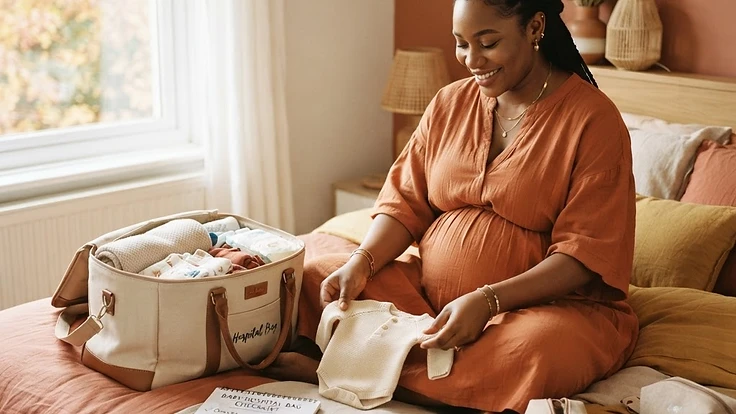
2. Pack your hospital bag by week 36
For you:
- Original ID, antenatal card/file, and hospital registration documents
- 2–3 nightgowns that open at the front (for skin-to-skin and breastfeeding), plus a robe
- Maternity pads (heavy flow), disposable underwear or old pants you don't mind discarding
- Nursing bras, breast pads
- Toiletries, slippers, phone charger with a long cable
- A going-home outfit — pregnancy size, not pre-pregnancy size
For baby:
- 4–6 sets of newborn/0–3 month clothes, mittens, socks, cap
- Baby wrapper or shawl (many Nigerian hospitals expect you to bring your own)
- Newborn diapers, wipes, a soft towel
- A going-home outfit, ideally a full body wrapper for the journey home
For your companion:
- Snacks and water (labour can be long), change of clothes, phone charger, cash for incidentals
3. Write a simple birth plan — and share it
A birth plan doesn't need to be complicated. Cover:
- Who you want in the room with you
- Your preference on pain relief (epidural availability varies by hospital — ask in advance)
- Whether you want skin-to-skin immediately and to delay the first bath
- Your preference on breastfeeding within the first hour, if mother and baby are stable
- What should happen if a C-section becomes necessary
Share this with your doctor/midwife at your 36-week visit, and keep a copy in your hospital bag.
4. Know your "go to the hospital now" signs
- Contractions that are regular, increasingly painful, and about 5 minutes apart for over an hour (first-time moms can often wait slightly longer than moms on their second baby or later)
- Your water breaks — even without contractions yet
- Reduced fetal movement
- Heavy bleeding, severe headache, blurred vision, or swelling in your face/hands (possible signs of pre-eclampsia — this is urgent)
- Any moment your instinct says "something isn't right" — trust it and call your hospital
5. Sort the practical things at home in advance
- Prepare freezer-friendly meals for the first two weeks postpartum
- Arrange help — a family member, a trusted house help, or a postpartum doula — for at least the first 1–2 weeks
- Set up the baby's sleeping space and have diapers/wipes stocked before you go into labour, not after
- Register the pregnancy for maternity leave with your employer according to Nigerian labour guidelines, and confirm return-to-work logistics ahead of time
6. Prepare emotionally, not just physically
Birth rarely goes exactly "to plan," and that's okay. Talk to your partner about flexibility — an unplanned C-section or induction isn't a failure, it's simply what your baby needed. If fear about labour is keeping you up at night, that's completely normal too; you don't have to carry it alone.
Inside the Pregnancy Circle on MomCircleNG, other expecting moms are sharing their own hospital bag lists, birth stories, and hospital recommendations across Lagos, Abuja, Port Harcourt and beyond — a good place to ask real questions and get real answers before your big day.
However labour unfolds, you are more prepared than you think.


