
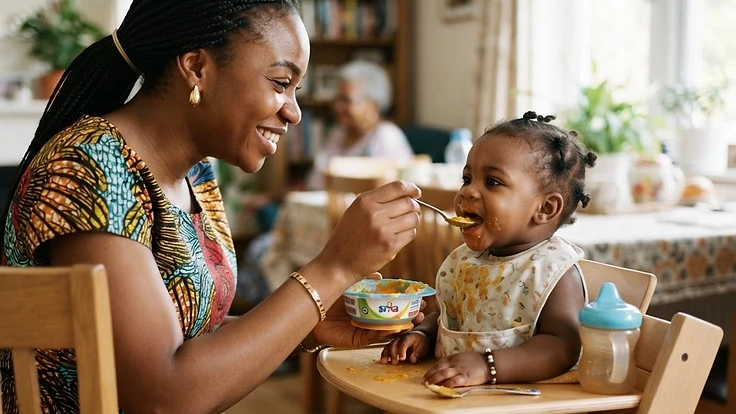
Around 6 months, your baby’s nutritional needs begin to outgrow what milk alone can provide, and they become developmentally ready to explore food. Introducing solids — also called complementary feeding — is a big, exciting milestone. This guide focuses on doing it safely, at the right time, with familiar Nigerian foods.
Exclusive feeding before 6 months
The World Health Organization recommends exclusive breastfeeding for the first 6 months — no water, no pap, no formula, no juice. Breastmilk (or, where needed, infant formula) provides everything your baby needs and is the safest option for tiny, immature digestive systems. This article does not recommend starting complementary foods before 6 months as a general rule; introduce solids around 6 months, guided by your baby’s readiness and your healthcare provider.
Readiness around 6 months
Signs your baby may be ready include:
- Good head and neck control and the ability to sit with support.
- Interest in your food — reaching, watching, opening their mouth.
- Loss of the tongue-thrust reflex (no longer pushing food straight out).
- Ability to move food from the front of the mouth to the back to swallow.
These signs usually appear together around 6 months. If you are unsure, ask your doctor.
First foods: purées, mashed foods and pap
Start with smooth, single-ingredient foods. Good Nigerian first foods include:
- Pap (akamu/ogi) made from fermented maize, millet or guinea corn, thinned and smooth — do not add sugar or excess honey.
- Puréed sweet potato or yam (well cooked and smooth).
- Mashed ripe plantain or mashed avocado.
- Puréed vegetables like carrot or pumpkin (ujeja/ugu can be introduced smooth).
- Fruit purées — ripe banana, pawpaw (papaya), apple.
Offer one new food at a time and wait 2–3 days before adding another so you can watch for any reaction.
Nigerian food examples by age
6–8 months: smooth and mashed
Thin pap, smooth purées of sweet potato, yam, plantain, carrot, pumpkin, and mashed banana or pawpaw. Begin adding protein: puréed, very soft beans (well cooked and blended), finely puréed fish (check carefully for bones), or egg yolk. Iron is important now — mashed, cooked egg yolk and soft beans help.
9–11 months: lumpy and soft-chewable
Move from smooth to mashed with soft lumps. Soft, small pieces of yam, plantain and sweet potato; well-cooked, flaked fish; soft scrambled egg; beans porridge (cooked very soft); soft, minced meat. Let your baby begin to self-feed soft pieces with their hands.
12 months and older: family foods
By 12 months your baby can eat most of what the family eats, as long as it is not too salty, spicy or sugary. Continue breastfeeding if you can; whole cow’s milk can be introduced as a drink from 12 months. Cut foods into small, manageable pieces.
Texture progression and finger foods
Gradually move from smooth purées → mashed → soft lumps → soft finger foods. Good early finger foods: soft ripe banana slices, well-cooked sweet potato sticks, soft plantain, pieces of ripe pawpaw, soft bread. Finger foods build chewing skills and fine motor control.
Responsive feeding
Responsive feeding means watching your baby, not forcing. Offer, let them set the pace, and stop when they turn away, close their mouth or lose interest. Meals should be calm, not a battle. Trust your baby’s appetite — it varies day to day.
Choking hazards
Avoid whole nuts, popcorn, hard sweets, whole grapes or large chunks of meat. Cut round foods lengthwise, and always supervise your baby while eating. A baby should sit upright for meals, never left alone with food.
Food hygiene
Babies’ immune systems are still developing. Wash your hands and your baby’s hands before meals; use clean utensils and bowls; cook food thoroughly; store prepared food safely and discard leftovers. Use clean, safe water to prepare pap and drinks.
Foods and drinks to avoid
- Honey under 12 months (risk of infant botulism).
- Added salt and sugar — babies’ kidneys and taste preferences do not need them.
- Cow’s milk as a drink under 12 months (not suitable as a main drink; small amounts in food are fine).
- Tea, coffee and sugary drinks.
- Undercooked or raw foods.
Frequently asked questions
My baby rejects solids at first — what do I do?
Normal. Some babies need 10–15 tries to accept a new taste. Stay calm, keep offering, and never force. Milk is still the main nutrition until around 12 months.
Can I add sugar to pap so my baby eats more?
No. Sweetening early sets a preference for sweet foods. The natural taste of the grain is fine; your baby does not know “bland” yet.
How many meals a day?
Start with 1–2 small meals a day at 6 months, building to 3 meals plus snacks by around 9–12 months, alongside continued breastfeeding.
This article is general nutrition information and not a substitute for medical advice. Speak with your healthcare provider about your baby’s growth and feeding. Find more support in the MomCircleNG Learning Hub or ask Mama AI in the Assistant.


