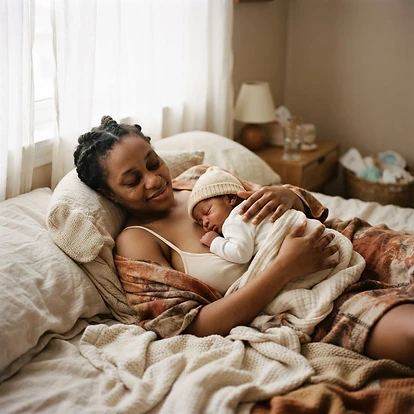
Birth is one day. Postpartum is a season.
We spend nine months preparing for the birth, the hospital bag, the birth plan, the name. But the day after birth begins a season that lasts months, and almost no one prepares us for it.
Here are the parts of postpartum that caught so many of us by surprise, so you do not have to learn them the hard way.
The body keeps changing
You might expect your body to "bounce back." Instead it is tender, leaking, healing and unfamiliar. Your hair might fall out in handfuls. You might still look pregnant for weeks. This is not failure. This is a body that built a human and is now finding its new shape, on its own timeline.
What is normal in the first weeks:
- Lochia (post-birth bleeding) that slowly lightens over 4 to 6 weeks.
- Swelling, night sweats and breast engorgement as your hormones shift.
- A soft, stretched belly that takes time, not willpower, to settle.
- Perineal or caesarean soreness that needs rest, not heroism.
If you have heavy bleeding (soaking a pad in under an hour), fever, severe pain, bad-smelling discharge, or signs of a blood clot, contact your healthcare provider immediately. Trust your instinct.
The emotions come in waves
The baby blues, tears over nothing, a flash of anger, a wave of love so strong it scares you, are common in the first two weeks. They come and go and are driven by the sudden drop in pregnancy hormones.
But if sadness, anxiety or numbness lasts beyond two weeks, or feels overwhelming, it may be postpartum depression (PPD), and it deserves real support, not silence. Signs to take seriously:
- Persistent low mood or crying most days.
- Feeling numb or disconnected from your baby.
- Anxiety or panic that stops you resting or sleeping.
- Intrusive scary thoughts or thoughts of harm.
PPD is common, it is not your fault, and it is treatable. Please speak to a healthcare provider. You deserve to feel like yourself again.
You grieve your old life, and that is okay
Loving your baby and missing your old freedom can exist at the same time. You can be grateful and grieving. You can adore your child and mourn the woman who had quiet mornings and long baths. Both are true. Neither makes you a bad mother.
Grief in postpartum is rarely named, but it is real. Naming it can be the first step to releasing it.
The relationship shifts too
Many couples hit their hardest stretch in the first year after a baby. Sleep deprivation, new roles and a tiny third person between you can make romance feel distant. This is normal, and it is not a sign your love is over. Read our guide to reconnecting with your partner for practical steps.
Support is not optional
The mums who recover best are not the strongest ones. They are the ones with help. Help with food, with sleep, with chores, with someone to hold the baby so you can shower. If you have a partner, a mother, a friend or a community like MomCircleNG, ask. Asking is a skill your future self will thank you for.
What MomCircleNG offers new mums
- The Mum Check-In: a 60-second wellbeing check that helps you notice how you are really doing.
- Mama AI: gentle, judgement-free guidance any time of day or night.
- A community of mums by stage and location, so you are never the only one awake.
- Daily with Princess: a daily voice of encouragement to start your day grounded.
Postpartum is not a checkpoint. It is a becoming.
You are not supposed to have it together. You are supposed to heal, slowly, with grace. One day at a time, you will find a rhythm that is yours. And one day you will look back and realise you became someone stronger, softer and wiser than the woman who held her baby for the first time. Join MomCircleNG and heal with your village around you.


