It is 6:00 PM in a busy Nigerian household. You just returned from work or running your business, tired from Lagos traffic or long hours on your feet. You sit down with your child to review homework, and within ten minutes, you find yourself explaining the same math problem for the fifth time. Your frustration rises, your voice gets loud, and your child bursts into tears.
Mama, if this scene sounds familiar, take a deep breath. You love your child deeply and want the best for their education, but shouting during homework is exhausting for both of you. Fortunately, you can help your child excel academically while building a peaceful, supportive home environment.
Why Shouting Backfires on Academic Performance
In many traditional homes, shouting is viewed as necessary discipline. However, neuroscience tells a different story.
When a child is shouted at, their brain enters a "fight, flight, or freeze" stress response. Stress floods their body with cortisol, effectively shutting down the prefrontal cortex — the part of the brain responsible for logical thinking, memory, and concentration. Instead of processing the math formula or spelling word, your child's brain is focusing entirely on surviving your anger. Over time, shouting creates deep anxiety around schoolwork and destroys intrinsic motivation.
Building a Peaceful Homework Routine
A structured, predictable routine removes daily arguments about when and where schoolwork happens:
- Allow a decompression buffer: Never force a tired, hungry child straight into homework after school. Give them 30 to 45 minutes to eat, drink water, change out of their uniform, and share how their day went.
- Set up a dedicated study space: Create a quiet, well-lit corner away from the living room television. Keep pencils, erasers, and notebooks organized nearby.
- Break tasks into short focus blocks: Children have limited attention spans. Use 15 to 20-minute focus blocks followed by a quick 5-minute stretch or water break.
The Power of Daily Reading Together
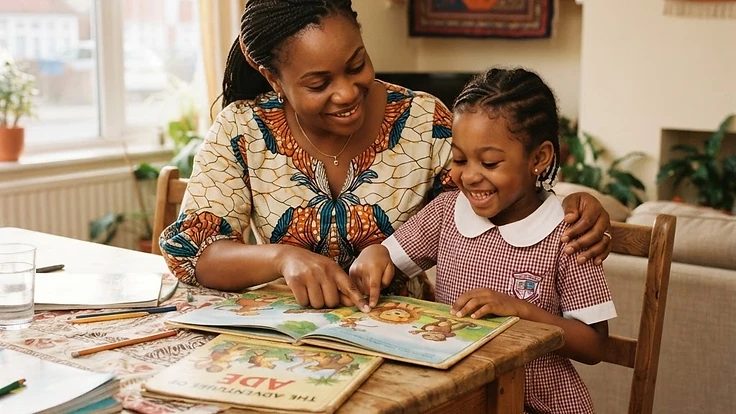
If you do only one academic activity outside of school, make it daily reading. Spending just 15 minutes reading together every evening expands your child's vocabulary, strengthens comprehension, and builds critical thinking skills. Let them read storybooks, age-appropriate magazines, or comics. When children view reading as an enjoyable bonding activity with mama rather than a chore, their overall academic confidence skyrockets.
Partnering with Teachers and Navigating PTA Culture
In Nigeria's active PTA culture, it is easy to view teachers merely as grade-assigners. Instead, treat your child's teacher as a valuable partner in your child's development.
- Schedule regular, calm check-ins rather than waiting until report card day.
- Frame questions constructively: Ask, "How is he participating in class?" or "Where can we support her learning at home?"
- If your child struggles with a teacher's style, discuss it privately and respectfully with the educator away from your child.
Praise Effort, Not Just Top Grades
When we only celebrate 100% scores, children learn to fear failure. If they receive a lower grade, they may hide their schoolwork or feel worthless.
Instead, cultivate a growth mindset by praising effort and strategy. Say: "I saw how hard you practiced those spelling words every evening this week. I am so proud of your dedication!" When children know their worth isn't tied solely to perfection, they develop resilience and a genuine love for learning.
Balance Screen Time and Restful Sleep
Unregulated screen time — whether television, tablets, or mobile games — drains a child's mental energy and weakens focus. Set clear boundaries: no screens during study hours or right before bedtime. Ensure your child gets 8 to 9 hours of quality sleep every night so their brain can consolidate what they learned during the day.
Find Your School-Age Mama Village
Parenting a school-age child brings new milestones, from entrance exams to friend dynamics. You do not have to figure it all out alone. On MomCircleNG, you can connect with mamas in your area via Discover Moms, participate in stage-specific circles, tune into weekly Wednesday voice chats, or ask our Ask Mama AI assistant for instant study advice. For personalized guidance, MomCircleNG offers access to trained counselors and a child therapist to help navigate learning or emotional difficulties — accessible through both Free Access and full Membership.
Frequently Asked Questions
What should I do if my child refuses to do homework? Stay calm. Acknowledge their fatigue: "I know you are tired today." Offer a brief break, then break the assignment into tiny steps, starting with the easiest problem to build momentum.
How can I help my child if I don't understand their new curriculum? Focus on guiding their study process rather than having all the answers. Teach them how to read textbook examples, search for explanations, or write down clear questions to ask their teacher the next day.
Is extra lesson tutoring mandatory for primary school success? Not always. Quality rest, daily reading, and structured home revision are often far more effective than overloading a tired child with hours of extra lessons every evening.
How do I handle poor term results without shouting? Take time to cool down before reviewing the report card. Sit together calmly, review where the gaps were, celebrate what went well, and write down a practical action plan for the new term.
Mama, your warmth and encouragement are the greatest catalysts for your child's success. Keep leading with love.
Community • Support • Growth


