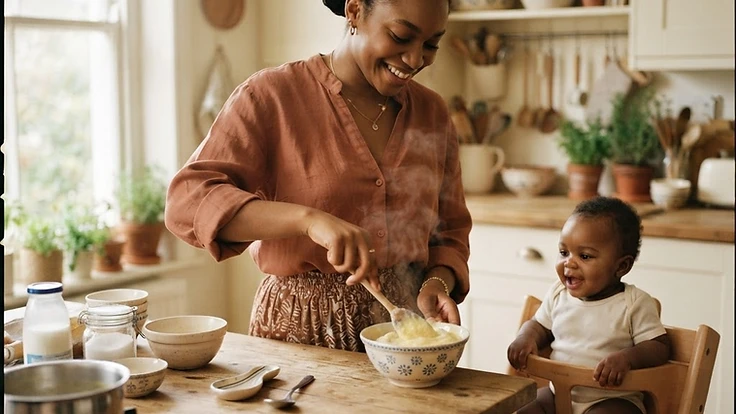
Your mother made pap. Her mother made pap. Somewhere in your family history, there is a woman stirring akamu at 5am while the house was still quiet.
So when your baby turns six months and it's time for first foods, of course pap is where you begin. It's familiar, affordable, and made with love. But there's one thing your grandmother couldn't have known: plain pap alone isn't enough to carry a growing baby through this season.
This guide is here to help you do what Nigerian mothers have always done — feed our babies well — with what we now know about what their little bodies need.
Why plain pap isn't enough anymore
Pap is made from fermented corn, and corn is low in iron. Around six months, the iron stores your baby was born with start to run out. This is why paediatricians ask so many questions about what baby is eating — because low iron in this window is one of the most common nutrition gaps in babies here.
The fix is beautifully simple: enrich the pap you already make. You don't need imported cereals. You need pap, plus a little wisdom.
How to fortify your baby's pap
The principle: add something rich in protein and iron, and pair it with something rich in vitamin C so the iron actually absorbs. A fortified bowl of pap should look fuller, richer, and more nourishing than plain akamu.
Options that work in real Nigerian kitchens:
- Add your baby's usual milk (breast milk or their formula) instead of just water — instantly richer.
- Add a small spoon of soybean flour (soy pap) — a classic Nigerian fortification.
- Add crayfish powder (once your baby has started proteins, and you've tried it once alone first).
- Add a few drops of red palm oil — a traditional source of vitamin A.
- Serve with a small side of fruit rich in vitamin C (orange, pawpaw) on the side, if baby is ready.
Please keep it simple at first: one new addition at a time, a few days apart, so you can notice what your baby enjoys and what doesn't agree with them.
The safety line every Nigerian mom should know
A few rules matter at this age, no matter what family traditions say:
- No honey before one year.
- No added salt or sugar in baby's food — their kidneys don't need it, and their taste is still forming.
- Not too watery: pap should be thick enough to sit on the spoon. Very watery pap fills the tummy with liquid and leaves no room for food.
- Not too hot: always test on the inside of your wrist before feeding.
If your baby refuses pap at first, that's not failure — that's taste buds learning. Offer again another day, warm, patient, unhurried. Babies often need to try a food many times before they accept it.
When to ask your baby's doctor
This guide shares what has worked in Nigerian kitchens for generations, but your baby is not a recipe — they're a little person with their own needs. For anything about your baby's weight, health, feeding difficulty, or allergies, please speak with your paediatrician or clinic. The village is for encouragement and experience; the hospital is for answers. We hold both, and we never confuse them.
From one mama to another
There's something sacred about feeding a baby the food your own mother fed you. When you stir that pot of pap, you're not just feeding your baby — you're continuing a line of women who always found a way to nourish their children with whatever they had.
Now you're just adding what you know to what they knew. That's how the village grows.
Community • Support • Growth


