The strength nobody claps for
There is a particular kind of tired that has nothing to do with sleep. It is the tired of being the one everybody leans on, the one who remembers, decides, absorbs and keeps going, no matter what.
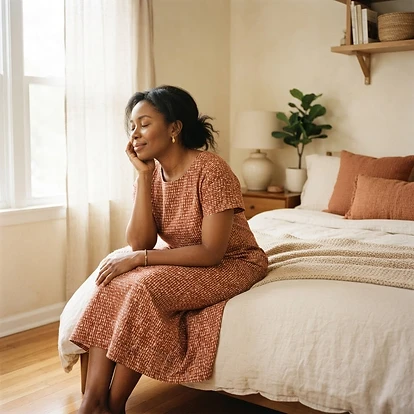
From the outside, she looks fine. Calm, capable, unshakeable. From the inside, she is holding her breath, waiting for someone to ask how she is doing and meaning it.
If you are that woman, this is for you. You are allowed to be tired of being strong.
What being the strong one costs you
Strength, when it becomes a role you can never step out of, starts to quietly cost you:
- Rest. You cannot rest, because rest feels like letting everyone down.
- Honesty. You learn to say "I'm fine" so well that even you begin to believe it.
- Connection. People stop checking on the strong one, because she always seems okay.
- Your body. What you do not say out loud, your body often ends up carrying.
Many mothers describe reaching a point where they cannot cry, cannot ask, cannot stop, until something breaks. That breaking point is not weakness catching up with you. It is the cost of carrying in silence what should have been shared.
Why we hide how much we carry
For many Nigerian mothers, strength was not a choice. It was an inheritance. We watched our own mothers hold households together, and we learned that a good woman does not complain. Add the pressure to keep a home, raise children, keep a job or business, and manage what family expects, and it is no wonder asking for help can feel like admitting defeat.
But here is the truth that takes years to learn: strength is not the same as silence. The strongest thing you can do is tell the truth about what you are carrying, while there is still something left of you to protect.
You were not made to be everybody's shelter. Sometimes you are allowed to be the one who needs sheltering.
What it teaches the people around you
When you never let anyone see you struggle, everyone learns a quiet lesson: that your needs are optional. Your children learn it. Your partner may learn it. Your family learns it.
When you begin to say, gently and honestly, "I need help with this," you teach them something better. You teach your children that asking for help is normal, that people share the load, and that a woman is allowed to be human. That lesson is worth more than perfect strength ever could be.
What actually helps
- Name what you are carrying. Write it down. The load is harder to hold when it lives as a vague heaviness in your chest.
- Ask for one specific thing. Not "I need help" in general, but "Can you take the school run on Thursday?" Specific asks are easier for people to say yes to.
- Let someone see the real answer. The next time you are asked how you are, resist "I'm fine" once. Notice who listens.
- Find your people. A community of women who admit when they are tired makes it safe for you to do the same. That is one of the things our circle exists for.
- Check in with yourself. The Mum Check-In takes two quiet minutes and asks the questions no one else is asking you.
You are not too much
You are not too much to hold, too much to support, or too much to love with your needs included. If you have been the strong one for a long time, begin gently. You do not have to fall apart to deserve rest. You just have to be a person, which you already are.
And if the tiredness has gone beyond tired, past the point where rest helps, that is worth talking to someone about. Reaching out is not the end of your strength. It is part of how you finally put it down.


