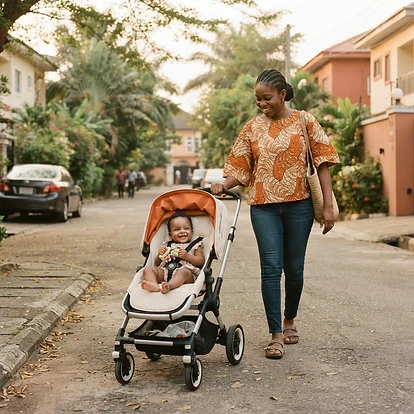
There is enormous pressure on Nigerian mothers to "snap back" quickly — and a lot of advice that ranges from useless to genuinely unsafe, including waist trainers, appetite-suppressant teas, and drinking mixtures that promise to melt fat.
Here is the honest version: your body spent nine months building a baby, a placenta and extra blood. It will not return to its pre-pregnancy state in six weeks, and it does not need to.
What actually happens to your body
- The first two weeks. You lose the baby's weight, the placenta, and a lot of fluid. This is the fastest drop you will see.
- Weeks three to six. The uterus shrinks back, swelling settles, and bleeding tapers. Many mothers look noticeably different but not yet like themselves.
- Months two to six. Fat stores laid down in pregnancy begin to shift, especially if you are breastfeeding, eating well and moving.
- Six to twelve months. Most mothers who return to steady habits reach a comfortable weight somewhere in this window. Some do not, and that is not a moral failure.
See postpartum belly: what's normal for the physical changes in more detail.
Wait for your six-week check
Before your postnatal check, the goal is recovery, not weight loss. Rest, eat, feed your baby, and let your body heal. If you had a caesarean, a tear, or heavy bleeding, the timeline is longer. Get clearance from your doctor before returning to intense exercise.
Breastfeeding and weight
Breastfeeding uses energy, but it does not guarantee weight loss and it is not a reason to eat very little. Severe restriction can reduce supply and leave you exhausted. Eat proper meals with protein and vegetables, drink to thirst, and treat food as fuel rather than punishment.
What works, in order of importance
- Sleep where you can get it. Short sleep makes appetite hormones work against you; this matters more than any diet trick.
- Protein at every meal — eggs, beans, fish, chicken, yoghurt. It keeps you full and protects muscle.
- Reduce liquid calories. Soft drinks, sweetened juice and malt drinks add up silently.
- Cook the way you already cook, with less oil and less stock cube. Nigerian food is not the problem; portions and fried extras usually are.
- Walk. Twenty to thirty minutes most days, with the baby or without, is enough to start.
- Strength work twice a week once you are cleared — bodyweight squats, wall press-ups, gentle core work. This changes shape, not just numbers.
Things to avoid
Waist trainers and corsets do not burn fat and can worsen pelvic floor pressure. Detox teas and slimming capsules sold online are unregulated, can interact with medication, and some have caused liver injury. "Flat tummy" herbal drinks are not tested for safety while breastfeeding. Crash diets below about 1,500 calories are not appropriate for a breastfeeding mother without medical supervision.
Be kind to the woman in the mirror
Your body is not a before-and-after project. If you find yourself avoiding photos, dreading comments from relatives, or crying about your body, that is worth talking about — our articles on the pressure to be a perfect mother and finding yourself again cover this honestly. The daily Mum Check-In is a private place to notice how you are actually doing, and other mothers in your area will tell you the truth about their timelines too.
General information only. If you have thyroid symptoms, severe fatigue, or rapid unexplained weight change, see your doctor. Postnatal care should always come before dieting.


