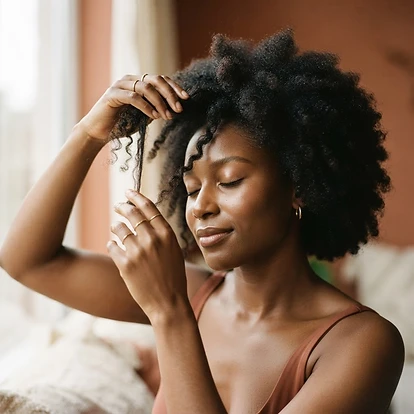
You are three or four months in. The baby is finally sleeping a little better, and then you notice it: hair on the pillow, hair in the shower, hair wrapped around your comb, hair in your baby's fist. Some mothers describe it as a handful a day. It is frightening, especially when nobody warned you.
Here is the reassuring part first: postpartum hair loss is normal, it is temporary, and it has a timeline.
Why it happens
During pregnancy, higher oestrogen keeps more hair in its growing phase, which is why many women's hair feels thicker and fuller for nine months. After birth, oestrogen falls. All the hair that was held in the growing phase shifts into the resting phase together, and then sheds together.
It has nothing to do with whether you breastfeed, and nothing to do with something you did wrong.
When it starts and when it stops
- Starts: usually two to four months after birth, often around month three.
- Peaks: in the first month or two of shedding.
- Ends: shedding usually settles within about six months of starting.
- Fullness returns: for most women, hair is back to its normal growth cycle within six to twelve months, often by the baby's first birthday.
If you are at month five and still shedding in handfuls, you are inside the normal window. It is not a sign that you are going bald.
The Nigerian hair factor
This is where our context matters. Postpartum shedding is normal, but some styles and treatments turn temporary shedding into permanent damage, and that part is preventable:
- Loosen the braids and ghana weaving. A style that pulls at the hairline for weeks can cause traction alopecia, which does not always grow back. Give your edges a break while your hair is shedding.
- Delay the relaxer. Postpartum hair is already fragile. Many stylists advise waiting at least six months after birth, and longer if you are still shedding heavily.
- Watch the wig and frontal installations. Glue and tight bands at the hairline do damage that shedding alone would not.
- Be gentle with detangling. Wide-tooth comb, on damp hair, starting from the ends.
What actually helps
- Protein and iron in your food. Hair is built from protein, and low iron is common after birth and after heavy bleeding. Beans, fish, eggs, meat, leafy greens, groundnuts.
- Ask for a blood test. If you are losing more than expected, or feel exhausted alongside it, ask your doctor to check iron and thyroid. Both are treatable and both cause hair loss.
- Skip the miracle supplements. Biotin and expensive hair vitamins are heavily marketed and rarely the answer. Unregulated mixtures promising regrowth are not worth the money, and some are not safe while breastfeeding.
- Protect your scalp from the sun and tension. Simple care beats aggressive treatment.
When to see a doctor
Speak to a doctor if you notice smooth bald patches, scalp itching or scaling, loss that continues past a year, loss accompanied by fatigue, heavy periods or weight change, or if you are also feeling persistently low or anxious. Shedding this disruptive often sits alongside postpartum depression and postpartum anxiety, and the emotional load is part of what deserves care.
It grows back
You will look at old photos and feel a pang. Most mothers do. Then the small hairs start appearing at your hairline, standing up stubbornly, and you realise the shedding has quietly stopped and the growing has started again.
Take care of the hair you have, eat properly, loosen the styles, and let time do the rest. Your body is doing something ordinary, however dramatic it feels in the shower drain.
This article is general information for mothers in Nigeria. It is not a diagnosis and does not replace an assessment by a qualified professional.
Related: Postpartum Recovery Week by Week and What Every Mum Should Know About Waist Trainers and Diastasis Recti.


