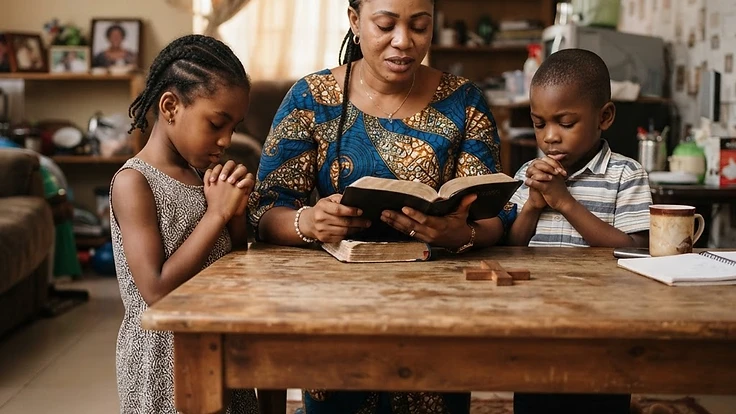
Ages 5 to 10 are a golden window. Your child is old enough to understand, young enough to still believe everything you say, and tender enough to copy the way you live. The habits of heart, faith, and body they pick up now are the ones they will carry into their teenage years.
Why this age matters
Between five and ten, a child is moving from you do everything for them to they are learning to do it themselves. This is the season where you stop carrying them and start walking beside them. What you teach gently now — about God, friendships, and how to care for their own body — becomes the quiet voice they hear for the rest of their lives.
1. God: a faith that is caught, not forced
Children don't need long sermons; they need to see your faith lived out. Let them catch God from you the way they catch your language — by being around you while you live it.
- Pray out loud, casually. A short prayer before meals, a whispered prayer when someone is sick, a "thank You, God" when something good happens. Faith becomes normal when it is part of the ordinary.
- Tell the stories simply. The Bible is full of adventure, courage, and kindness. Tell one short story at bedtime and ask, "What would you have done?"
- Answer their big questions honestly. "Where does God live?" "Why did Grandpa die?" You don't need perfect answers — you need a safe place to ask. "That's a beautiful question. Let's think about it together."
The goal is not a child who can quote scripture to impress people. It is a child who grows up knowing God is real, near, and kind — because that is how you treated Him at home.
2. Friends: teaching them to choose and to be chosen
At this age, friendships stop being "whoever is near me" and start being "whoever I like." This is your chance to shape what they look for in a friend — and the kind of friend they become.
- Teach the qualities, not just the names. Instead of "stay away from that child," say, "a good friend is kind, honest, and safe. Does this friend make you feel small or big?" Let them learn to measure people by how they treat others.
- Role-play the hard moments. "What would you say if a friend told you to leave the other child out?" Practicing the words at home makes them braver at school.
- Protect without controlling. Notice patterns — the friend who always leaves your child worse afterwards — and redirect gently. You don't have to forbid; you can simply make space for better friendships.
- Model it yourself. They are watching how you treat your friends, and how your friends treat you. The friendship standard in your home becomes their standard.
And when they come home hurt — and they will — resist the urge to fix it instantly. Listen first. Often, a child who feels heard can solve the problem themselves.
3. Hygiene: self-care as self-respect
Hygiene is not really about being clean. It is about learning that your body is yours, it is valuable, and it is your responsibility to care for it. That lesson — taught gently now — protects them far beyond childhood.
- Make it routine, not a war. Same order, every day: bath, brush, lotion, bed. A predictable routine removes the negotiation. You stop arguing about whether and only guide the how.
- Teach the why, not just the what. "We wash our hands because germs make us sick and we want to stay strong." Children who understand the reason cooperate; children who only hear commands resist.
- Give them ownership early. By 6 they can brush (with you checking). By 8 they can run their own bath. By 10 they can manage their own school-uniform care. Caring for themselves builds quiet pride.
- Begin teaching body boundaries. "Your body belongs to you. The parts under your swimsuit are private. No one touches them — and you don't touch anyone else's." Say it calmly, more than once. This is the foundation that protects them.
A child who learns to care for their body at seven will not need to be convinced at fifteen.
The thread that runs through all three
God, friends, and hygiene seem like three separate lessons. They are not. They are all the same lesson said three ways: you matter, you are loved, and you have a responsibility to care for what God gave you.
That is the belief a child carries into their teenage years. Not the rules they were forced to follow, but the confidence that they are known, chosen, and capable.
You don't need to do this perfectly. You just need to do it on purpose — a little, every day, while they are still small enough to hold your hand.


